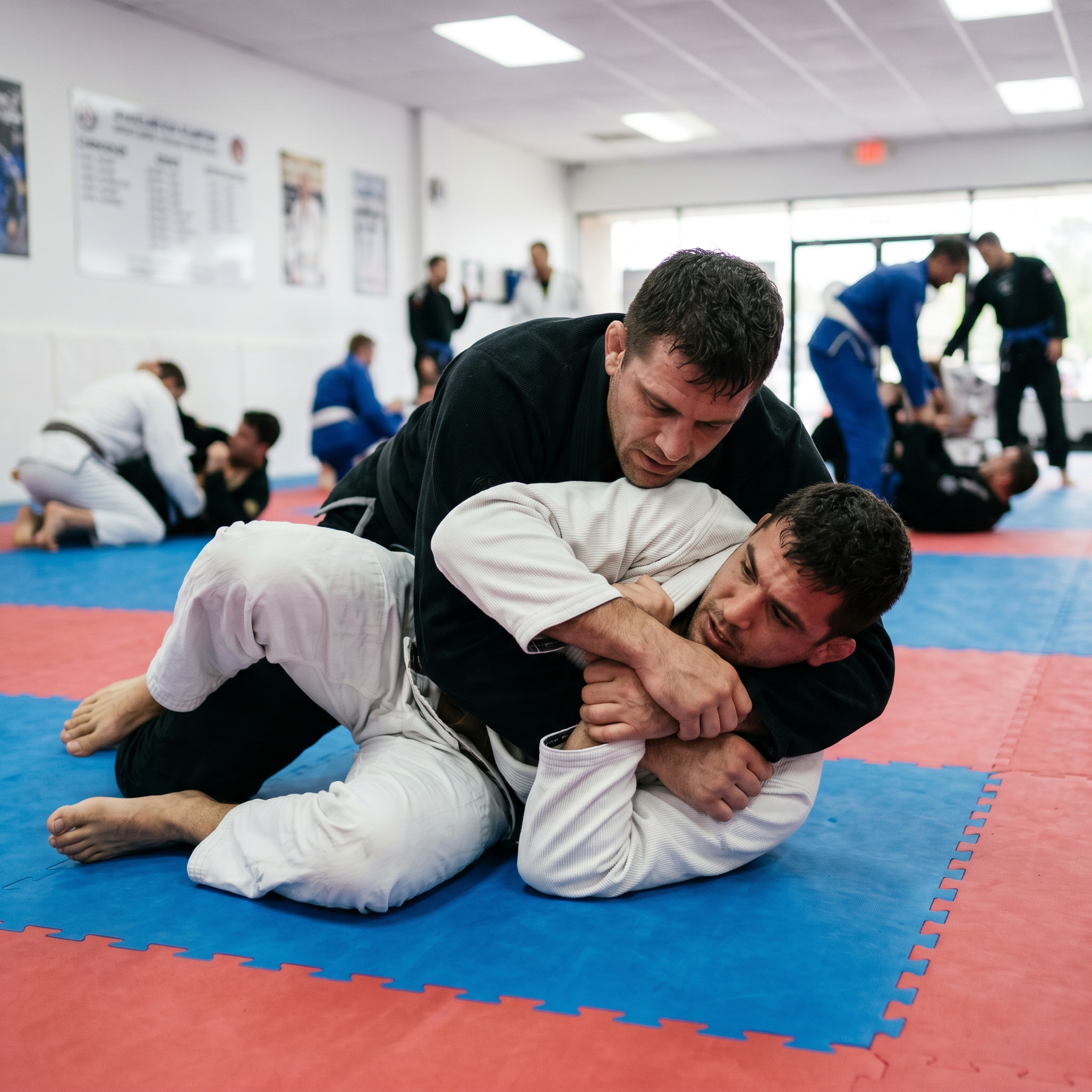
The D'arce Choke: Complete Technique Review
The D'arce choke is a highly versatile and powerful blood choke that is part of the front headlock family (alongside the Anaconda and Arm-In Guillotine). Based on a review of top-tier instructional material, here is a comprehensive breakdown of the mechanics, setups, and finishes for the D'arce choke.
1. Core Choking Mechanics
To successfully finish a D'arce without relying solely on brute strength or accidentally neck-cranking your partner, you must understand the underlying mechanics:
- Target the Soft Part of the Neck: A common mistake is pressing on the back of the neck (the muscle/hard part), which only causes pain. You must target the carotid artery (the soft part) to cut off blood flow to the brain.
- Elbow Positioning: The key to targeting the soft part of the neck is your elbow positioning. If your choking elbow points down, you hit the muscle. You must raise your elbow toward the opponent's armpit so your forearm sits parallel to the carotid artery.
2. Common Setups & Entries
The D'arce thrives on punishing opponents who expose their neck or over-commit to underhooks.
Punishing the Underhook (Top Half Guard or Side Control)
When an opponent fights for an underhook to escape side control or half guard: 1. Allow them to turn slightly onto their side and take the underhook. 2. Drop your chest/ear close to their back to eliminate space. 3. Shoot your choking arm under their armpit and push their head toward you using your free hand. 4. Slide your arm deeply across the neck, lock your bicep, and prepare to finish.The Quarter Nelson (From Turtle)
When the opponent is in the turtle position: 1. Secure a front headlock position. 2. Thread your arm under their armpit and place your hand on the back of their neck. 3. Use your other arm to lock a gable grip and apply downward pressure on the back of their head, rolling them onto their side (the Quarter Nelson flip). 4. Once they are on their side, shoot the choking arm deep, adjust your elbow, and lock the figure-four.The Ghost Escape D'arce (From Bottom Side Control)
A sneaky counter when you are pinned on the bottom: 1. If the top player crosses your near arm to the far side, use your free arm to push their head down. 2. Punch your trapped arm toward their hip and shrimp/run your legs out from underneath. 3. As you emerge, loop their head and arm, locking the D'arce from the bottom before scrambling to the top to finish.3. Finishing Details
Securing the grip is only half the battle. How you use your bodyweight determines the success of the finish:
- Keep Them on Their Side: The D'arce is easiest to finish when the opponent is on their side. If they get to their knees, they can defend and posture up. If they get flat on their back, your grip becomes shallow and rotational pressure is lost.
- The Sprawl & Drive: Drop your weight down and back, then drive off your toes to fold their trapped shoulder into their own neck. Avoid driving your weight too high over their shoulders.
- Switching Base to Mount: For extreme finishing leverage, once the choke is locked from side control or half guard, switch your hips to face their legs and step over into the mount position. Focus all your body weight directly onto their trapped tricep as you squeeze.
4. Troubleshooting & Backup Plans
A good attacker always has a backup plan if the opponent defends the primary threat:
- Opponent Postures Up/Pulls Head Back: If you can't reach their head to lock the D'arce from turtle, transition your grip and step over for a No-Gi Baseball Bat Choke or Mounted Triangle.
- Opponent Turtles Hard & Kills the Deep Grip: If you only have a shallow grip on the head and arm and they turtle tight, transition your grip to a "wristwatch" or S-grip, throw a leg over their back/head, and sit back for a Peruvian Necktie or Derby Choke.
- The Belly-Up Finish: If you accidentally roll them too far and they end up on their back, go with their momentum. Roll all the way through so your belly faces the ceiling (Belly-Up D'arce), walk your legs toward theirs, and crunch in to re-establish the rotational pressure.