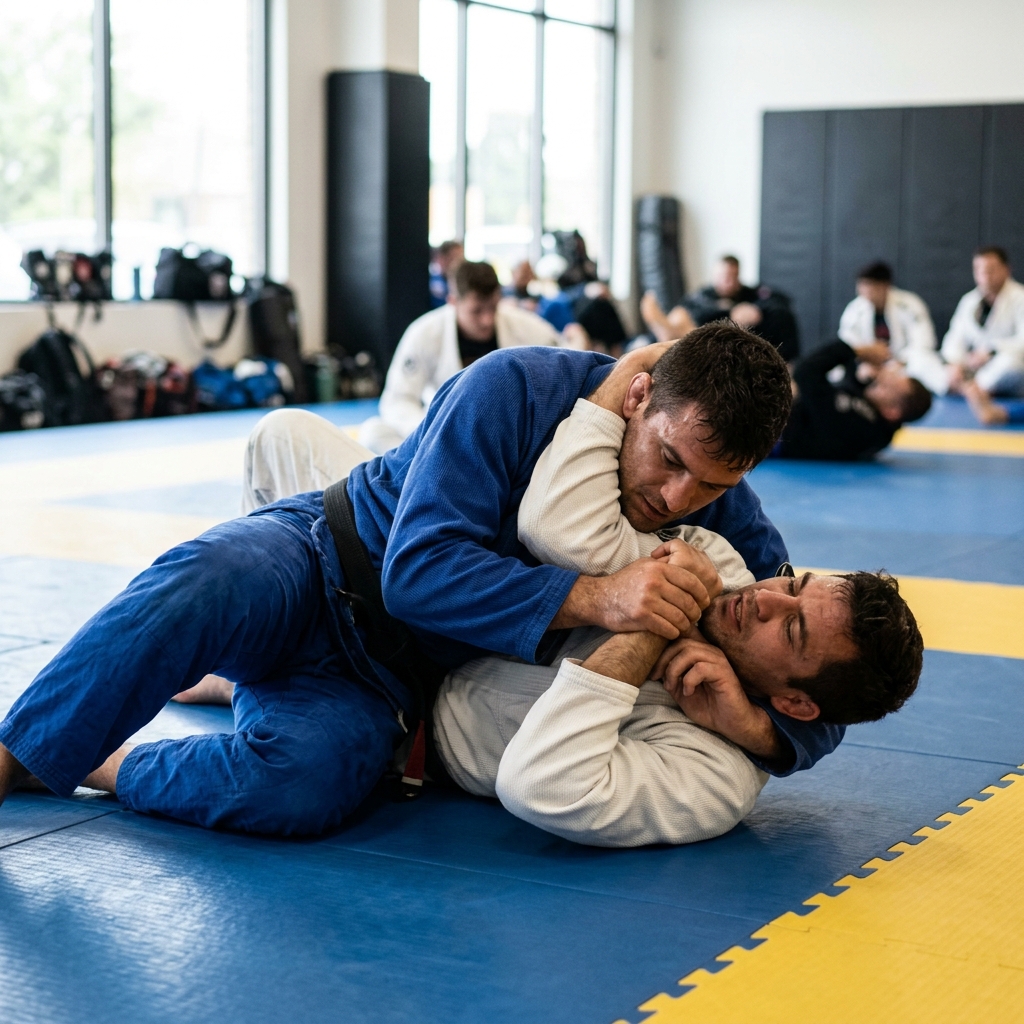
The Arm Triangle Choke: Perfecting the Bite and Finishing Mechanics
What is an Arm Triangle Choke? The arm triangle choke (also known as the head and arm choke) is a blood choke where you trap your opponent's head and one of their arms between your biceps and their own shoulder. The submission works by using your arm to compress one carotid artery, while driving their own trapped shoulder into the opposite carotid artery to completely cut off blood flow to the brain.
While it is one of the most powerful submissions in Jiu Jitsu, it is also notorious for being difficult to finish against resilient opponents. If the mechanics are off by a fraction of an inch, the submission goes from a clean blood choke to a painful (but survivable) neck or jaw crank.
By analyzing insights from top grapplers, we have distilled the exact setups, gripping details, and finishing mechanics you need to make your arm triangle inescapable.
Want to drill these details in person? Use our BJJ Gym Directory to find an academy near you.
The Setup: Jacking Up the Arm from Mount
The arm triangle is most commonly and effectively set up from the mount position. Your first goal is to isolate one of their arms and elevate their elbow above their shoulder line. If their elbow stays tight to their ribs, the choke is impossible.
The "Finger Crawl" Method: Find a gap between your opponent's bicep and torso to secure an underhook. Instead of trying to muscle their arm up, slowly "spider crawl" your fingers up the mat. Gaining an inch at a time works wonders to elevate the elbow even against much stronger opponents.
The Shoulder Push: Against very strong opponents who resist the underhook, try placing their arm on top of your shoulder. Move your body back to create a favorable angle, then drive forward. You'll use the power of your entire body to slide their elbow up and over your shoulder.
Once the elbow is elevated in front of their shoulder, quickly drop your head to the mat directly next to theirs (ear-to-ear). Your head will now block their arm from returning to a defensive posture.
Perfecting the "Bite" and Grips
The depth of your choking arm—the "bite"—is the single most important aspect of the arm triangle. If there is a gap between your forearm and your bicep around their neck, the choke will be weak.
- Dive the Shoulder: Don't stay high on their face. Scoot your body back slightly and dive your choking shoulder deep underneath their chin. You want to feel the soft part of their neck (the carotid artery) resting directly against your bicep.
- Wiggle for Depth: Lift their head slightly and reach your choking arm as deep across their neck as possible. Wiggle your fingers to gain micro-adjustments and eliminate all negative space.
- Palm Down for Power: Keep the palm of your choking arm facing the mat. This small detail engages the brachioradialis muscle in your forearm, swelling the muscle and making the choke significantly tighter.
- The Optimal Grip: Avoid the traditional Rear Naked Choke grip (grabbing your own bicep), which requires excessive muscle and can leave your elbow too high. Instead, use a Palm-to-Palm (Gable Grip) or an S-Grip. Secure your hands low—ideally below their shoulder blade to prevent them from rolling flat on their back.
The Dismount and Finishing Mechanics
You have the perfect bite, but the finish requires precise body mechanics to drive their trapped shoulder into the opposite side of their neck.
- Ear-to-Ear Pressure: Before dismounting from mount, make sure your head is glued to theirs. Your head is what pushes their trapped shoulder into their neck.
- Tripod and Block: Place your forehead on the mat and elevate your hips slightly into a tripod position. This makes your body heavy and frees your legs to dismount safely. Use your foot to hook their leg so you do not get caught in half guard as you slide off.
- The Angle of the Sprawl: As you drop into side control, do not lay perfectly parallel to them. You need an angle to drive power. Keep your hips low to the mat (sprawling your weight out), and keep your knee either pinning their hip or just slightly off to the side.
- Drive and Squeeze Progressively: The power comes from driving off your toes on the mat to push your body weight forward into the choke. Do not immediately squeeze at 100% and burn out your arms. Start your squeeze at a firm 70% pressure and slowly dial it up to 100%. The arm triangle often takes a few seconds for the blood restriction to force the tap.
Common Mistakes to Avoid
1. Squeezing With the Arms Instead of the Body: The finish should feel like a full-body sprawl and drive off your toes, not a bicep curl. 2. Lifting the Elbow: If the elbow of your choking arm lifts off the mat as you squeeze, you are losing the structural integrity of the choke. Keep that elbow glued to the floor. 3. Being Too High on the Neck: If your partner says it felt like a jaw crank, you need to dive your shoulder lower under the chin before locking your grip.