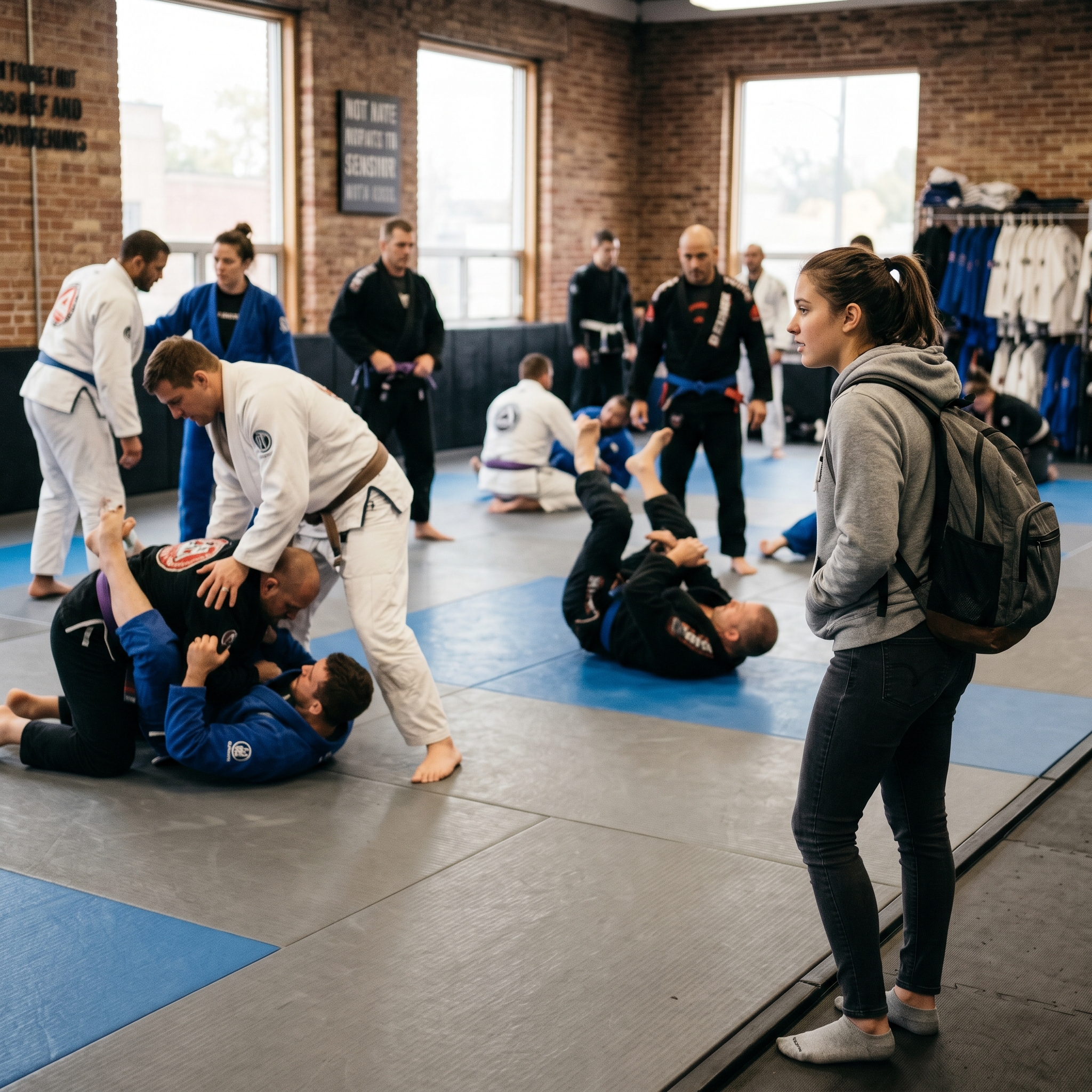
How to Choose a BJJ Gym: 7 Things Every Beginner Should Look For
Last Updated: January 2026 Time Required: 15 minutes to read, 1-2 weeks to evaluate gyms Difficulty: Beginner
Target Keyword: how to choose a BJJ gym Secondary Keywords: what to look for in a BJJ gym, BJJ gym near me, best jiu jitsu gym for beginners, how to find a good BJJ academy
---
What You'll Learn
By the end of this guide, you'll be able to:
- Identify the signs of a quality, beginner-friendly BJJ gym
- Avoid red flags that lead to injuries or wasted money
- Confidently choose a gym that fits your goals and schedule
Quick Summary
Choosing the wrong BJJ gym can mean injuries, wasted money, or quitting before you ever experience the benefits. The right gym accelerates your learning, keeps you safe, and becomes a second home.
The 7-step evaluation process: 1. Check instructor credentials 2. Observe a class before joining 3. Evaluate the training culture 4. Assess schedule and location fit 5. Understand pricing and contracts 6. Look for beginner-specific programs 7. Trust your gut after a trial class
---
Why This Matters
The gym you choose will determine whether you train BJJ for 3 weeks or 30 years.
A bad gym leads to:
- Unnecessary injuries from untrained partners or poor supervision
- Ego-driven culture that discourages questions
- Contracts that trap you in a place you hate
- A safe environment to fail and learn
- Training partners who help you improve
- Coaches who meet you where you are
---
Step 1: Check Instructor Credentials
Goal: Verify the head instructor has legitimate experience.
What to look for:
- Belt rank of at least purple belt (ideally brown or black)
- Lineage that can be verified (who promoted them?)
- Competition or teaching history
- Years of active training (not just years since first class)
- Instructor can't name who promoted them
- Belt rank is self-awarded
- No photos or documentation of rank
---
Step 2: Observe a Class Before Joining
Goal: See the actual training environment before committing.
What to watch:
- How does the instructor interact with beginners?
- Are higher belts patient with lower belts during sparring?
- Is the gym clean and well-maintained?
- What's the ratio of instruction to drilling to sparring?
Common issue: Gyms that won't let you observe may have something to hide.
---
Step 3: Evaluate the Training Culture
Goal: Determine if the gym's vibe matches your goals.
Questions to ask:
- Is the focus on competition, self-defense, or hobbyist training?
- How intense is the average sparring session?
- Do students socialize before/after class?
- Is there a mix of ages, genders, and skill levels?
---
Step 4: Assess Schedule and Location Fit
Goal: Ensure you can actually attend consistently.
The 2x rule: If you can't realistically attend at least 2 classes per week, you'll struggle to progress.
Consider:
- Commute time during rush hour
- Class times that fit your work/family schedule
- Weekend and open mat availability
- Parking or public transit access
---
Step 5: Understand Pricing and Contracts
Goal: Know exactly what you're paying for—and what you're locked into.
Typical pricing ranges (2026):
- $100–$150/month: Standard for most urban gyms
- $150–$250/month: Premium gyms or major metros
- $50–$100/month: Smaller towns or community gyms
- Multi-year contracts with large cancellation fees
- Hidden fees for belt testing, seminars, or gym access
- No month-to-month option after initial commitment
---
Step 6: Look for Beginner-Specific Programs
Goal: Ensure the gym can handle someone starting from zero.
Signs of a beginner-friendly gym:
- Dedicated fundamentals or "intro" classes
- Structured curriculum for white belts
- Controlled sparring or positional drilling (not just open rolls)
- Written or video resources for at-home review
---
Step 7: Trust Your Gut After a Trial Class
Goal: Make your final decision based on firsthand experience.
What to notice:
- Did people introduce themselves and make you feel welcome?
- Were instructions clear enough to follow?
- Did you leave energized or defeated?
- Can you see yourself here in 6 months?
---
Common Mistakes to Avoid
Mistake 1: Choosing Based on Price Alone
What happens: Cheap gyms often lack qualified instructors or safe training partners. How to avoid: Use price as one factor, not the deciding factor.Mistake 2: Signing a Long Contract Immediately
What happens: You're locked in before you know if the gym fits. How to avoid: Ask for a trial period or month-to-month option first.Mistake 3: Ignoring Your Commute
What happens: You stop showing up because it's "too far." How to avoid: Be honest about what's sustainable long-term.---
FAQ
How much should I expect to pay for BJJ?
Most gyms charge $100–$200/month. Premium gyms in major cities can be $200+.Can I train BJJ without competing?
Absolutely. Most practitioners are hobbyists who never compete.What should I wear to my first class?
Wear athletic clothes (rash guard, shorts, or gym clothes). The gym will tell you if a gi is required.How long does it take to get a blue belt?
Typically 1–2 years of consistent training (2–3x per week).What if I'm out of shape?
Start anyway. BJJ will get you in shape—that's not a prerequisite.---
Next Steps
Ready to find the right gym?
Use Jiu Jitsu Authority to search verified BJJ gyms near you. Filter by location, read reviews from real practitioners, and find a gym that fits your goals.
---
SEO Implementation Notes
Schema: Implement `HowTo` schema with the 7 steps + `FAQPage` schema for the FAQ section.
Internal links to add:
- Link to city-specific gym guides (Austin, Miami, Orange County)
- Link to "BJJ Belt System Explained" from Step 1
- Link to "Best BJJ Gi for Beginners" from Step 6