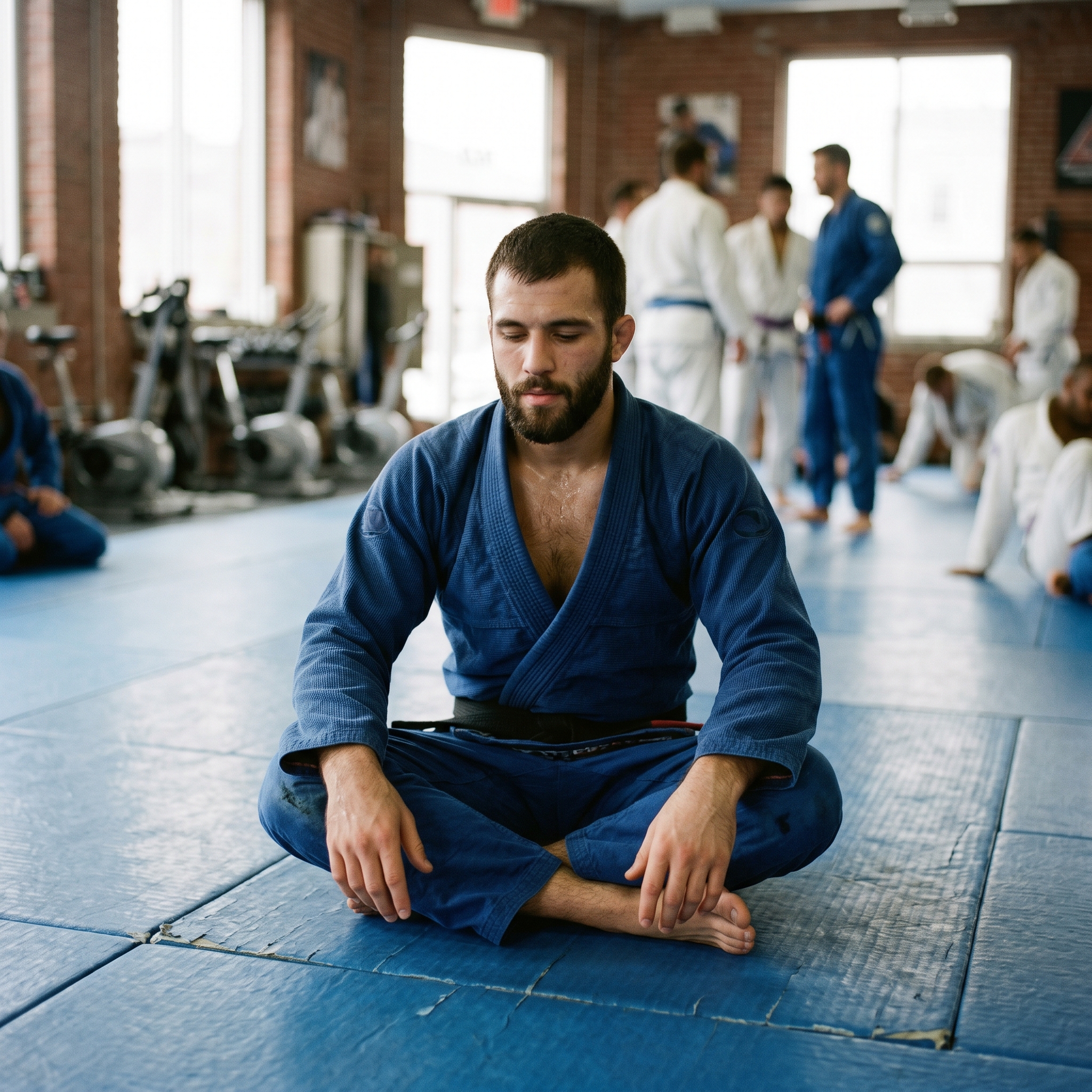
The Mental Health Benefits of Jiu Jitsu: Why It's More Than Just Fighting
They call it "Murder Yoga."
It starts as a joke. You tell your friends you're going to roll around on the ground with sweaty strangers in pajamas to "relax." They look at you like you're crazy.
But every Jiu Jitsu practitioner knows the truth: The mats are the only place the noise stops.
In a world of constant notifications, deadlines, and anxiety, Brazilian Jiu Jitsu (BJJ) has emerged as one of the most powerful tools for mental health. It’s not just about learning to strangle someone; it’s about learning to untangle your own mind.
Here are the 5 mental health benefits of Jiu Jitsu and why it’s often described as the best therapy you can get (that also happens to teach you self-defense).
1. Radical Mindfulness (The Flow State)
Meditation is hard. Sitting in a quiet room trying to "clear your mind" often just leads to thinking about your grocery list.In Jiu Jitsu, you don't have a choice. When a 200-pound opponent is trying to pass your guard and sit on your chest, you simply cannot think about your emails. You cannot worry about your mortgage. You cannot dwell on that awkward thing you said at the meeting.
You are forced into the present moment. This is what psychologists call "The Flow State"—a state of complete immersion in an activity. BJJ demands 100% of your focus, giving your brain a much-needed vacation from the anxieties of daily life.
2. Chemical Therapy: The Cocktail of Happiness
BJJ is physically exhausting. Hard rounds spike your heart rate and push your muscles to failure. This triggers a massive release of neurochemicals:- Endorphins: The body's natural painkiller and mood elevator.
- Dopamine: Released when you solve a problem (like finally hitting that sweep).
- Serotonin: Boosted by physical exertion and confidence.
- Oxytocin: The "bonding hormone," released through the high-trust physical contact and camaraderie of training.
3. Voluntary Hardship & Resilience
Modern life is arguably too comfortable. We have temperature-controlled rooms, food delivery, and endless entertainment. Yet, rates of anxiety and depression are higher than ever.The Stoics believed in "Voluntary Hardship"—choosing to do difficult things to build a callous over your mind.
Jiu Jitsu is hard. You will get crushed. You will lose. You will be uncomfortable, hot, and claustrophobic. By voluntarily facing this micro-adversity 3-4 times a week, real-life problems start to shrink. If you can survive a 5-minute round with the gym monster, that difficult email from your boss doesn't seem so scary anymore.
4. Ego Death and Humility
The mats don't care how much money you make. They don't care about your job title or your followers.In BJJ, a 140-pound teenager can strangle a CEO. This constant reality check forces you to leave your ego at the door. You have to admit "I don't know" and "I lost" every single day.
This regular dose of humility is incredibly healthy for the psyche. It teaches you that failure isn't fatal—it's just feedback. It allows you to stop taking yourself so seriously and start enjoying the process of learning.
5. The Tribe (Community)
Loneliness is a modern epidemic. Men, in particular, often struggle to find deep, meaningful friendships in adulthood.Jiu Jitsu provides an instant tribe. You bond quickly with your training partners because you trust them with your safety every day. There is no small talk on the mats; you skip straight to shared struggle.
The "locker room talk" in a BJJ gym isn't usually gossip—it's life advice, support, and laughter. Having a third place (not home, not work) where you are accepted and challenged is essential for mental well-being.
"It's Cheaper Than Therapy"
Is BJJ a replacement for professional therapy? No. If you have serious mental health issues, please see a doctor.
But as a tool for daily maintenance of sanity? It is unmatched.
We train to learn self-defense, sure. But most of us keep showing up because of how it makes us feel. We train to quiet the noise. We train to reconnect with ourselves. We train because, for that one hour, everything else fades away.
If you’re feeling overwhelmed, anxious, or stuck—try a class. It might be the reset button you’ve been looking for.
--- Ready to start your journey? Check out our guide on How to Choose the Right BJJ Gym in Your City.