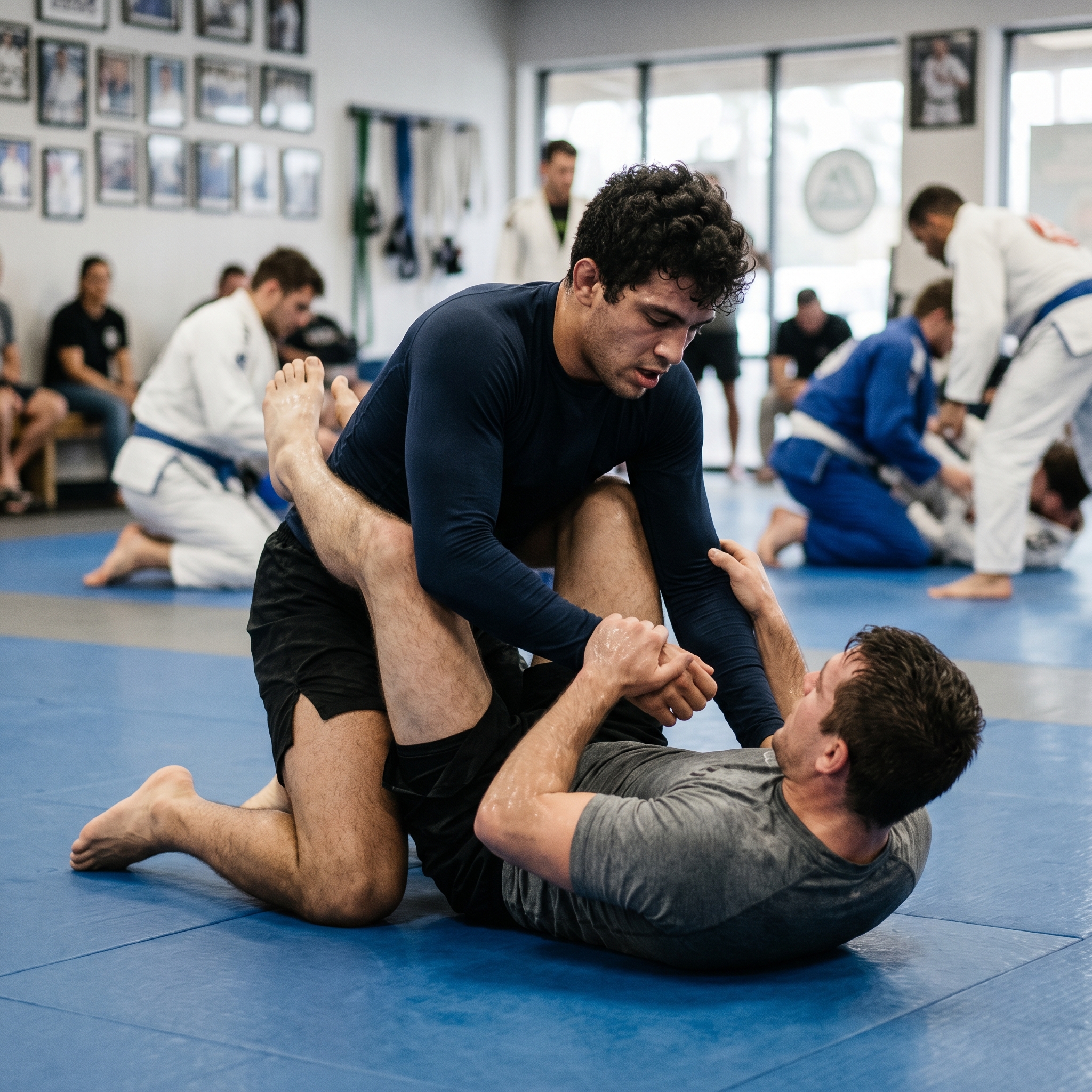
The Ultimate Guide to No Gi Jiu Jitsu: What You Need to Know
Jiu Jitsu has undergone a massive evolution over the years. It originated in Japan, flourished and expanded in Brazil, and has now exploded worldwide. Traditionally, Brazilian Jiu Jitsu (BJJ) was practiced exclusively in a Gi—a heavy cotton robe with thick collars, lapels, and sleeves meant to simulate battlefield attire or heavy street clothes.
But as the sport grew, many practitioners began to find the traditional Gi somewhat impractical. Some felt it was less applicable to real-world fighting or modern Mixed Martial Arts (MMA), while others just found the heavy grips slowed down the action too much.
No Gi Jiu Jitsu originated as the perfect solution. It is the art of training BJJ without the traditional uniform. Stripped of the heavy cloth, No Gi allows for faster-paced movements, easier transitions, and more explosive escapes. Today, it stands as the grappling style that most closely mirrors MMA.
If you're wondering whether you should try No Gi or how it differs from traditional training, you're in the right place. Let's break down everything you need to know about No Gi Jiu Jitsu.
---
1. What Do You Wear to No Gi Jiu Jitsu?
If you are a complete beginner wanting to try No Gi for the very first time, you don't need to break the bank. You can literally show up to practice in a tight gym shirt and athletic shorts without pockets.
However, as you continue to train, you'll want to invest in proper No Gi gear. High-paced grappling with baggy clothes can be dangerous—loose fabric can easily result in fingers or limbs getting trapped and twisted.
The Essential No Gi Uniform:
- Rash Guards: These are skin-tight, moisture-wicking athletic shirts designed specifically for grappling. They protect your skin from mat burn and keep you cool.
> 💡 Gear Tip: While standard gym clothes work for day one, eventually buying a dedicated rash guard and fight shorts is highly recommended for your safety and comfort.

---
2. The Pacing and Strategy: Speed vs. Friction
The biggest shock for anyone taking off the Gi for the first time is the speed. No Gi is a way faster-paced game.
In the Gi, you have an abundance of heavy fabric to grip, wrap, and stall with. That friction slows the game down. Without the Gi, it is much easier to slide around. This lack of friction allows practitioners to transition into dominant positions much faster—but it also allows the bottom person to escape much more easily. You can't just grab a handful of collar to stop someone from sliding out of side control.
The Rise of Leg Locks and Wrestling
Because the upper body is harder to control without grips, the rule sets and meta of No Gi have rapidly expanded.- Leg Attacks: Submissions that were once considered taboo or impractical in traditional BJJ are now standard. Heel hooks, ankle locks, and kneebars are commonplace and highly effective in the No Gi scene.
- Wrestling Influence: No Gi has made Jiu Jitsu incredibly appealing to wrestlers. Wrestlers are already trained not to grab clothes, they are used to competing in tight singlets, and they thrive in a high-paced, scramble-heavy environment. This background gives them a massive advantage when transitioning to BJJ.
---
3. Common Pitfalls for Beginners Transitioning to No Gi
One of the biggest mistakes beginners (and even veterans) make is thinking one style is objectively "better" than the other, or assuming they only need to train one.
Many traditional Gi practitioners think that because they are a blue or purple belt in the Gi, they will automatically be just as dominant in No Gi. This is not true at all. While many fundamental skills, body mechanics, and concepts translate, the timing, grips, and defense are completely different.
If you love Jiu Jitsu, why not train both? Training both styles makes you a more well-rounded grappler.
> Gym Culture Note: Keep in mind that some academies specialize. For example, 10th Planet Jiu Jitsu schools train exclusively in No Gi. Consider this when choosing the right gym for your goals.

---
4. Should You Start with Gi or No Gi?
The ultimate question: As a beginner, should you focus on one or do both?
You should train whichever one keeps you consistent.
In the beginning, building the habit of showing up to the gym is what matters the most. If you hate the heat and friction of the Gi, and No Gi is what keeps you coming back to the mats—do No Gi. If you love the tradition and the highly technical, methodical puzzle of the Gi—do the Gi.
Eventually, trying both will benefit your overall game, but in those first six months, consistency is king.
---